A Second Chance for Five Iconic Baobabs: Timbavati Nature Reserve Offers a New Home to Rescued Trees
Timbavati Nature Reserve | Limpopo, South Africa | 11 November 2026
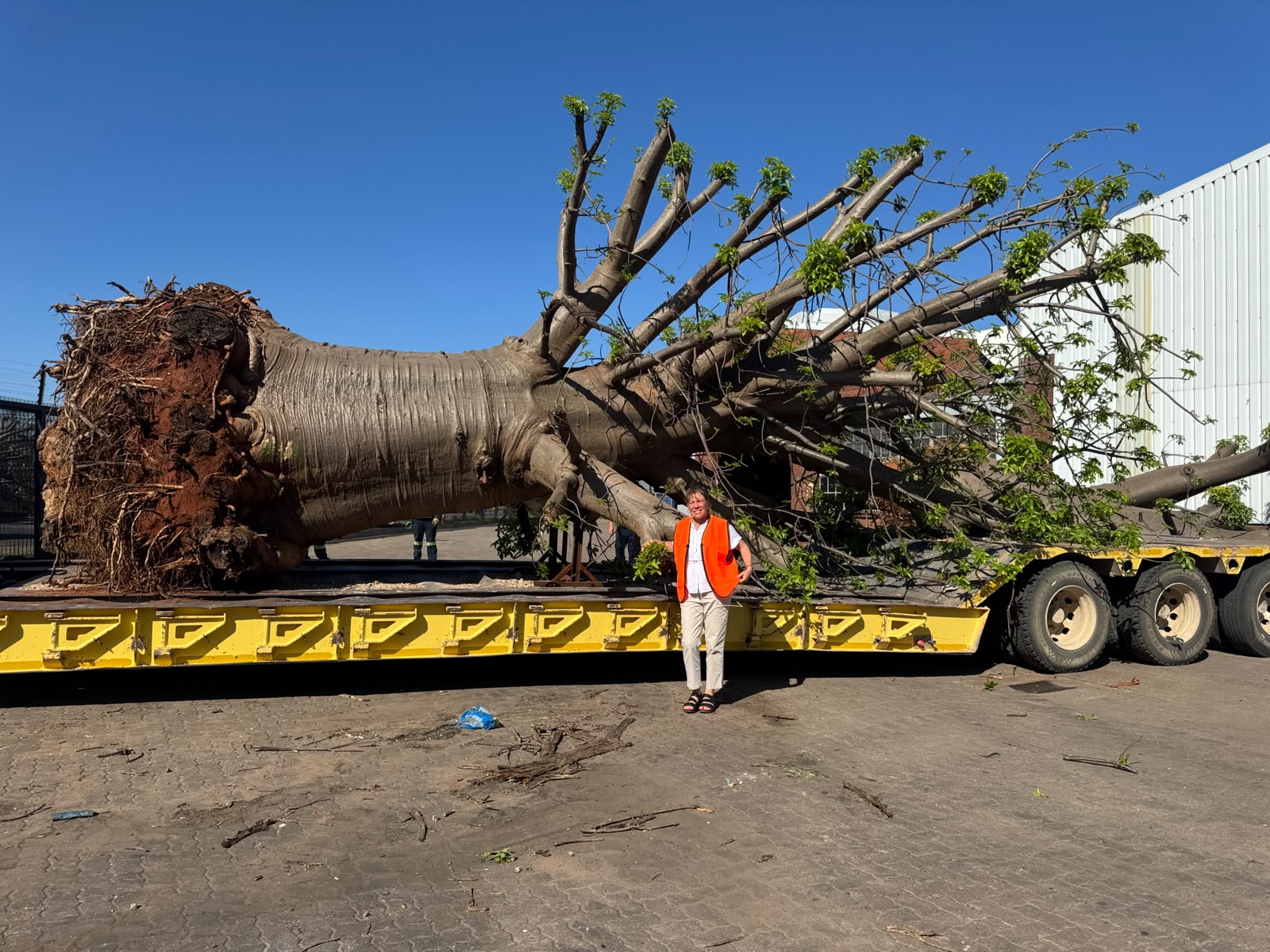
Five iconic African baobab trees (Adansonia digitata), whose removal from the Waterberg region of Limpopo and subsequent discovery in Durban attracted considerable public attention, will hopefully soon find a new home within the Timbavati Nature Reserve.
The trees, which were reportedly removed from their natural environment and transported to Durban for export, have been at the centre of an investigation into the unlawful removal and attempted export of protected indigenous trees. While the circumstances surrounding their removal remain a matter for the relevant authorities, the Timbavati is pleased to be part of an initiative that will hopefully give these remarkable trees a second chance.
Subject to the issuing of the necessary permits and finalisation of transport arrangements, it is hoped that the five baobabs will make their way to the Timbavati within the next week or two.
Moving five large baobab trees across the country is, understandably, no small undertaking. The relocation will require considerable planning, specialised transport and careful handling, particularly given the size of the trees and the time they have already spent out of the ground. Their journey is far from over, but there is a shared determination among those involved to give them the best possible opportunity to survive.
For the Timbavati, this initiative represents an opportunity to contribute to conservation in a way that extends beyond the wildlife for which the Reserve is perhaps best known.
While much of the Reserve's conservation efforts are focused on protecting wildlife, particularly rhinos threatened by poaching, the responsibility of conserving our natural heritage extends far beyond animals. Our indigenous trees, plants and the habitats they create are equally important, and unfortunately, they too are vulnerable to exploitation and wildlife crime.
The African baobab is one of the most recognisable trees on the continent. Capable of living for thousands of years, these magnificent giants are an important part of Africa's natural and cultural heritage. They provide food and shelter for numerous species and have stood as enduring features of African landscapes for generations.
To remove such a tree from its natural environment is not simply to remove a plant. It is potentially to disturb centuries of ecological history, something that cannot easily be replaced.
Edwin Pierce, Warden of the Timbavati Nature Reserve, explains:
"We spend an enormous amount of time, effort and resources protecting our wildlife, particularly our rhinos, from the devastating effects of wildlife crime. But conservation is about so much more than just the animals. Our indigenous trees and plants are equally deserving of protection, and when the opportunity arose to provide these baobabs with a new home, we felt it was something we simply had to be part of.
"These trees have already been through an extraordinary ordeal, and while we appreciate that there are challenges ahead, the thought of giving them the opportunity to recover and hopefully continue growing for hundreds of years within a protected natural environment is something quite special."
Situated within the Greater Kruger conservation landscape, the Timbavati Nature Reserve offers an extensive protected environment where the trees will hopefully be able to re-establish themselves.
The Reserve's conservation team will assist with identifying suitable planting locations, taking into consideration the environmental conditions, ecological suitability and long-term protection of the trees. Once planted, they will require appropriate care and monitoring to give them the best possible chance of recovery.
There are, of course, no guarantees. The trees have experienced considerable disturbance, and their survival will depend on a number of factors. Nevertheless, the Timbavati believes that every reasonable effort should be made to give them the opportunity to recover.
"This is not simply about planting five trees," Pierce adds.
"It is about recognising that every part of our natural environment has value. We cannot spend our lives advocating for the protection of our wildlife while overlooking the exploitation of the very vegetation and ecosystems that support them.
"There is also something quite humbling about the thought that, long after all of us involved in this initiative are gone, these baobabs could still be standing in the Timbavati. That is the kind of conservation legacy we should all be working towards."
The initiative has been made possible through the commitment and efforts of a number of individuals and organisations who have worked to safeguard the trees and find a suitable long-term solution.
The Timbavati would particularly like to acknowledge Dr Sarah Venter and the Baobab Foundation for their dedication to the welfare of these trees and their efforts over the past months to secure a positive outcome.
The Reserve is also grateful to a Timbavati member whose personal involvement and commitment to conservation helped bring this opportunity to the attention of the Reserve and played an important role in facilitating the proposed relocation.
Their combined efforts demonstrate what can be achieved when people who share a genuine concern for our natural heritage come together with a common purpose.
The Timbavati also recognises the important role of the relevant authorities in protecting South Africa's indigenous species and looks forward to working with the necessary stakeholders to ensure that the relocation is undertaken with the appropriate permits and authorisations in place.
Although the circumstances that brought these trees to this point are unfortunate, their story now presents an opportunity to raise awareness of the threats facing South Africa's protected indigenous trees and, hopefully, to demonstrate how conservation efforts can provide a positive outcome.
For the Timbavati, the anticipated arrival of these five baobabs is about much more than adding a few remarkable trees to the landscape. It is about giving something back to nature and recognising that conservation sometimes presents opportunities in ways we least expect.
There is still a considerable amount of work to be done before the trees can be safely transported and replanted, but the prospect of seeing them standing once again, with their roots firmly planted in the soil of the Timbavati, is something everyone involved can look forward to.
"These trees have already been through enough," Pierce concludes.
"Our hope is that the Timbavati can now offer them a place where they can put down their roots, recover and hopefully remain undisturbed for generations to come."
Media enquiries
Edwin Pierce
Warden | Timbavati Nature Reserve
Email: warden@timbavati.co.za
Tel: +27 (0)15 793 2436
Website: www.timbavati.co.za



Where to next?

@timbavati_pnr

