Why We Need Vultures: Marking International Vulture Awareness Day with the Endangered Wildlife Trust
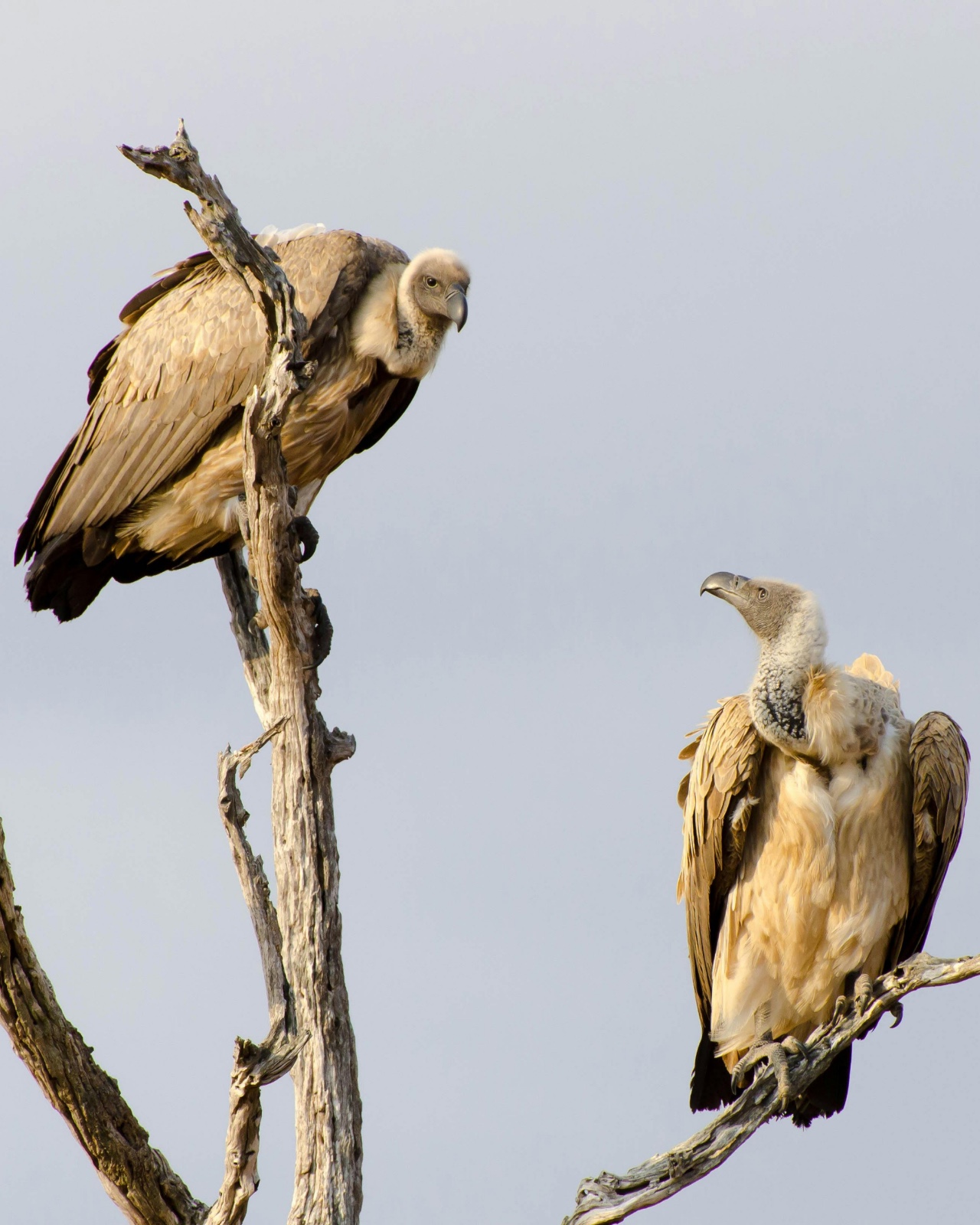
Every year on the first Saturday of September, conservationists, researchers, and nature lovers across the globe pause to celebrate one of the animal kingdom's most misunderstood heroes: the vulture. This year, International Vulture Awareness Day falls on 5 September 2026, a fitting moment to look at the work being done right here in South Africa, and across the continent, to keep these extraordinary birds in our skies.
The day itself has deep local roots. It began in 2006 as a joint initiative between the UK's Hawk Conservancy Trust and the Endangered Wildlife Trust's (EWT) Birds of Prey Programme. Two decades on, it has grown into a global movement, with more than 100 organisations across 43 countries taking part each year to shine a light on vultures and the essential role they play in keeping ecosystems healthy.
Nature's Clean Up Crew
Vultures are obligate scavengers; they survive almost entirely on carrion. It's not a glamorous job, but it's a vital one. By rapidly stripping carcasses, vultures remove rotting material from the environment before it can become a breeding ground for disease. A landscape without vultures is, quite literally, a dirtier and more dangerous place for both wildlife and people.
Yet across Africa, vulture numbers have collapsed. Populations have dropped drastically over the last 30 years, and four of the continent's 11 vulture species are now classified as Critically Endangered, one step from extinction in the wild.
The Poison Problem
The single greatest threat facing Africa's vultures is poisoning. Because vultures gather in their hundreds around a single carcass, one poisoned animal can wipe out an entire flock in one sitting. Sometimes this poisoning is unintentional; vultures become collateral damage when carcasses are laced with pesticides to kill predators blamed for livestock losses. But increasingly, the poisoning is deliberate: poachers target vultures directly, because circling birds can give away the location of a fresh, illegal kill to rangers and law enforcement. Vultures are also killed for the trade in their body parts for belief based use. Beyond poisoning, they face collisions and electrocutions on power infrastructure, shrinking food sources, and the steady loss of the wild spaces they need to breed and forage.
EWT's Vultures for Africa Programme
This is the threat landscape the EWT's Vultures for Africa Programme was built to confront. The programme works across seven focal species, including the White backed, White headed, Hooded, Cape, Lappet faced, Bearded, and Rüppell's Vultures, and has active work underway in 17 countries.
Its work centres on tackling poisoning head on. Through Wildlife Poisoning Response and Prevention training, the programme has equipped more than 6,500 people (rangers, vets, and law enforcement officers) with the skills to respond safely and effectively when a poisoning incident occurs. Alongside this, the EWT helps manage the African Wildlife Poisoning Database, a continent wide effort with partners to record and track poisoning incidents so that patterns and hotspots can be identified and addressed.
The programme's reach goes further still:
- Research and monitoring: tracking and wing tagging vultures in countries including Mozambique, Zambia, Malawi, Namibia, Botswana, and Uganda to fill critical knowledge gaps about their movements and populations. In Mozambique's Gorongosa National Park alone, the EWT has helped build a tracking sample of more than 40 vultures in partnership with Boise State University.
- Policy and advocacy: representing conservation interests on South Africa's National Vulture Task Force and National Wildlife Poisoning Prevention Working Group, and contributing to the Convention on Migratory Species' Vulture Multi Species Action Plan (MsAP), a 12 year international framework guiding vulture conservation through to 2029.
- Partnership: working for more than a decade with the Hawk Conservancy Trust, including on long term surveys of vulture breeding populations in the Kruger National Park.
- Awareness: helping found and continuing to champion International Vulture Awareness Day itself, ensuring the plight of these birds stays visible on the global conservation agenda.
Safe Zones and a Sentinel in the Sky
One flagship initiative is the Vulture Safe Zone (VSZ) project. A Vulture Safe Zone is a defined stretch of land, sometimes spanning hundreds of thousands of hectares, where landowners, communities, and conservationists work together to strip out the threats vultures face, from poison and lead ammunition to unsafe power infrastructure. The Greater Kruger Lowveld Vulture Safe Zone is one of the EWT's flagship initiatives, stitching together close to 2.8 million hectares of private reserves, farms, national and provincial parks, and community land across the region - including the Associated Private Nature Reserves (APNR).
Perhaps the most inventive tool in the programme's kit is Eye in the Sky. It turns the vultures' own behaviour into an early warning system: by fitting birds with GPS trackers and monitoring their flight and feeding patterns, the system can detect the tell tale signature of a poisoned carcass and send a near real time alert to rangers and law enforcement, often before more birds are lost. Nearly 180 vultures across five species are currently wired into the system, watching over an area of roughly two million square kilometres across southern and East Africa. The system's value was proven in the most sobering way in May 2025, when an EWT poisoning alert led rangers and vets to a mass poisoning scene in Kruger National Park's Mahlangeni section, one of the largest ever recorded in southern Africa. Of the 123 vultures that died, most were White backed and Cape Vultures, but the rapid, EWT triggered response also meant 83 birds were found alive and could be treated.
What You Can Do
Vulture conservation isn't something that happens only in the field, it needs public support too. The EWT encourages people to get involved by:
- Never using poison to control predators, crop raiding animals, or for any other reason, including rodenticides marketed as "raptor friendly."
- Switching to lead free ammunition when culling or hunting, and removing any lead shot carcasses from the landscape so scavenging vultures aren't exposed.
- Modifying farm water reservoirs with ladders or ramps so raptors can't drown in them.
- Reporting injured or dead raptors found near power lines to the EWT's toll free line (0860 111 535), and reporting sightings of tagged, ringed, or GPS fitted vultures by emailing ewt@ewt.org.za.
- Calling the EWT rather than acting alone if livestock losses or other conflicts involve raptors.
- Donating to fund the fieldwork, training, and research that keeps this programme running.
A Sky Worth Saving
It's easy to overlook vultures. They are often not as beloved as an elephant or a lion. But their disappearance would leave African ecosystems, and the communities that depend on them, measurably worse off. This International Vulture Awareness Day, the EWT's message is simple: these birds have been cleaning up after us for millennia. It's time we returned the favour.
Learn more about the EWT's Vultures for Africa Programme at ewt.org/what-we-do/saving-species/vultures, and about the Birds of Prey Programme at ewt.org/what-we-do/saving-species/birds-of-prey.



Where to next?
Guardians of the Timbavati: Honouring Our Frontline on International Ranger Day
.jpg)
The Elephant Effect: What Birds and Bats Reveal About Ecosystem Change
.jpg)
Project Gaia: AI and Drone-powered Game Census across 100 000 ha of the Timbavati and Sabi Sand Nature Reserve
@timbavati_pnr